
Why Your Food's Quality Matters More Than You Think
Updated: Aug 11
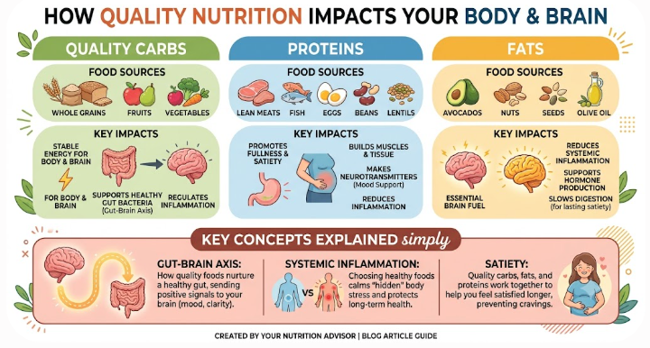
When we eat, our bodies look for more than just calories—they look for quality.
When building a nutrition plan, we often obsess over the numbers. How many grams of carbs? What is the protein target? Which fats are good, which fats are bad?
However, peer-reviewed clinical research from the last decade reveals that the quality of your macronutrients matters for optimising your physical and mental health. Studies demonstrate that low-quality macronutrient intake—such as highly refined sugars or ultra-processed fats—is strongly linked to increased mortality and metabolic disorders.
Conversely, high-quality, whole-food macronutrient choices serve as direct fuel for both your body and your brain via the gut-brain axis and can modulate systemic inflammation.
Additionally, choosing high-quality macronutrients dramatically changes how full we feel. Proteins are powerhouses for satiety; they take longer to digest and actively signal your brain that you're well-fed. Complex carbohydrates, packed with natural fiber, slow down digestion so your blood sugar rises and falls like gentle waves rather than sharp spikes. Healthy fats release hormones that tell your stomach to slow digestion.
How Quality Macros Fuel Mind & Body
The modern nutritional landscape utilises different dietary frameworks, but across all profiles, structural quality remains the common denominator for holistic health.
The Brain Connection
Have you ever wondered what happens to your food after you eat it? Your digestive system—your gut—is like a busy highway. Its main job is to absorb nutrients so your body can stay strong and energised. To keep this highway running smoothly, we need to choose high-quality foods. Recent scientific research shows exactly how quality macronutrient building blocks protect our gut.
When your gut and brain are constantly chatting, scientists call this the gut-brain axis. A healthy, well-nourished gut produces chemicals called neurotransmitters (chemical messengers) like serotonin, which regulates your mood. When your gut is happy and protected, it sends calming signals straight to your brain, improving your mental clarity, lowering feelings of anxiety, and boosting your daily energy.
By simply choosing whole, fresh foods, you are not just feeding your stomach—you are nourishing your mind.
Inflammation
To understand how food lowers body-wide stress, it helps to look at inflammation. Think of inflammation as your body's internal alarm system. Our gut has a delicate lining that lets vitamins and minerals into our bloodstream while blocking harmful substances from passing through. When your gut lining is irritated by low-quality foods, the alarm sounds, causing body-wide stress.
High-quality proteins provide the building blocks to constantly repair this wall. Meanwhile, complex carbohydrates—like the fiber found in oats and veggies—feed our friendly gut microbes. Healthy fats support the gastrointestinal tract by maintaining the integrity of the gut barrier and promoting a balanced microbiome to reduce inflammation.
When our gut microbes are well-fed, they create soothing compounds that keep the gut lining strong and healthy. When we eat poor-quality foods, like highly processed items, the gut lining can become irritated. This can cause the rest of the body to go on high alert, causing systemic inflammation (a state of defence or swelling throughout the body and brain).
What do Quality Macronutrients Look Like?
Carbohydrates: The Fiber Shield
Carbohydrates (Fiber vs. Refined Sugars): High-quality carbs focus on prebiotic, insoluble fibers and complex starches (found heavily in Plant-Based or Mediterranean diets). These compound structures support microbial diversity in the gut, producing Short-Chain Fatty Acids (SCFAs) that cross the blood-brain barrier to reduce neuroinflammation, regulate mood, and lower the risk of cognitive decline. Low-quality, highly processed carbs trigger blood sugar spikes, driving insulin resistance and accelerating cognitive fatigue.
Not all carbs are created equal. High-quality carbohydrates—like whole grains, beans, and vegetables—are packed with dietary fiber. Because your body cannot digest fiber on its own, it passes it down to your gut microbes.
When your gut microbes ferment this fiber, they produce short-chain fatty acids (SCFAs). These SCFAs act like a soothing balm, directly strengthening the gut wall and telling your immune system to stand down, which drastically lowers body-wide inflammation.
When we talk about "healthy" carbohydrates, we are usually talking about complex carbohydrates. Unlike simple carbs (like white sugar or refined flour), complex carbs are kept in their whole, natural state. This means they retain their fiber, vitamins, and minerals, which slows down how quickly your body converts them into energy.
Whole Grains
· Oats: Excellent for a steady release of energy and highly customisable for breakfast.
· Quinoa: A unique grain-like seed that pulls double duty because it contains all nine essential amino acids, making it a complete protein too.
· Brown Rice & Wild Rice: Nutrient-dense alternatives to white rice that keep the fiber-rich outer bran layer intact.
· Whole Wheat & Spelt: Look for 100% whole grain options when choosing breads or pastas.
Root Vegetables
· Sweet Potatoes & Potatoes: Packed with potassium, vitamin A, and complex starches that digest slowly.
· Butternut Squash: A comforting, naturally sweet option that is incredibly rich in antioxidants.
Legumes
· Lentils: A fantastic staple for soups and stews, providing a massive dose of both fiber and plant protein.
· Black Beans & Chickpeas: These provide steady energy and work beautifully in salads, bowls, or dips like hummus.
Whole Fruits
· Berries, Apples, and Bananas: While they contain natural simple sugars, they are also wrapped in water and structural fiber, which prevents the rapid blood sugar spikes caused by processed sweets.
Fats: The Cellular Soothers
Fats (Unsaturated Oils vs. Industrial Trans Fats): In a Ketogenic or Mediterranean diet, healthy fats are vital. Monounsaturated fats (like olive oil) and omega-3 fatty acids protect long-term cardiovascular health and lower the risk of hypertension. Crucially, high-quality lipid structures preserve cell membrane integrity, while poor-quality industrial fats are linked to heightened systemic inflammation.
The types of fat you eat change the actual structure of your cells. Poor-quality fats (like highly processed oils) act like lighter fluid for inflammation. High-quality fats do the exact opposite.
Omega-3 Fatty Acids (found in salmon, walnuts, and chia seeds) and Monounsaturated Fats (found in extra virgin olive oil) serve as natural anti-inflammatories.
They block the chemical pathways that create the "alarm" signals in your body, protecting your blood vessels and organs from chronic stress.
Healthy fats are incredibly versatile and easy to add to your daily meals. When looking to include more of them, you can generally break them down into a few main categories:
Whole Foods
· Avocados: Exceptional because they provide monounsaturated fats alongside a high amount of dietary fiber.
· Olives: The whole-food source of olive oil, perfect for snacks or tossing into salads.
· Eggs: Specifically the yolk, which contains omega-3 fatty acids, vitamins, and choline.
Nuts and Seeds
· Walnuts & Almonds: Great for a quick handful of brain-boosting fats and a satisfying crunch.
· Chia, Flax, & Hemp Seeds: Easy to sprinkle into oatmeal or smoothies; they are packed with plant-based omega-3s.
Seafood
· Fatty Fish: Salmon, mackerel, sardines, and trout are phenomenal sources of essential long-chain omega-3 fatty acids.
Oils and Dairy
· Extra Virgin Olive Oil: The gold standard for drizzling over warm dishes or making dressings.
· Full-Fat Yogurt or Kefir: Provides rich, satisfying dairy fats along with gut-friendly probiotics.
Protein: The Repair Crew
Protein (Amino Acid Diversity vs. Processed Meats): Rather than just hitting a massive total protein goal, prioritising a diverse array of high-quality sources (plant-based legumes, nuts, or clean animal proteins) is proven to mitigate risks for new-onset diabetes and chronic kidney disease. Quality amino acids synthesise key neurotransmitters like serotonin and dopamine, directly balancing mood and mental resilience across all age brackets.
Your gut lining replaces itself every few days, requiring a constant supply of fresh building blocks. High-quality proteins provide essential amino acids (the building blocks of protein) like glutamine.
Glutamine is the preferred fuel source for the cells lining your small intestine.
Without enough quality protein, the tight junctions—the microscopic "staples" holding your gut wall together—begin to loosen. By keeping these staples tight, protein prevents undigested food and bacteria from leaking into your bloodstream, avoiding an immune system freak-out.
Protein is essential for building and repairing tissues, maintaining muscle mass, and producing vital hormones. When it comes to nutrition, proteins are made of building blocks called amino acids. There are 9 "essential" amino acids that our bodies cannot make on their own, meaning we must get them from our food.
· Animal-Based (Complete Proteins): These naturally contain all 9 essential amino acids in the right proportions. Excellent options include poultry (chicken or turkey), red meat, wild-caught fish (salmon, tuna), eggs, and Greek yogurt or cottage cheese.
· Plant-Based: These include beans, lentils, chickpeas, tofu, tempeh, edamame, nuts, and seeds. While a few plant sources are complete proteins on their own (like quinoa, chia seeds, and soy/tofu), most individual plant foods are "incomplete," meaning they are low in one or two essential amino acids.
How to Combine Plant-Based Proteins
For a long time, it was believed you had to eat specific plant foods together at the exact same meal to get a "complete" protein. Nutrition science now shows that your body maintains a pool of amino acids. If you eat a variety of plant proteins throughout the course of a single day, your body will naturally combine them to build complete proteins.
An easy way to ensure you are getting all 9 essential amino acids is to remember this simple rule of thumb is to combine grains with legumes.
Here are some classic, delicious ways to naturally balance your amino acids:
1. Rice and Beans: A universal staple. The amino acids that are low in beans (like methionine) are high in rice, and vice versa (rice is low in lysine, which beans have in abundance).
2. Hummus and Whole Wheat Pita: Chickpeas (legumes) paired with sesame tahini and whole wheat bread (grains/seeds) form a perfect complete protein pair.
3. Peanut Butter on Whole Grain Toast: Peanuts are technically legumes, making them the perfect partner for whole-grain bread.
4. Lentil Soup with Whole Grain Crackers: A comforting way to combine a highly nutritious legume with a hearty grain.
5. Oatmeal topped with Pumpkin or Chia Seeds: Mixing your morning grains with seeds or nuts naturally rounds out the amino acid profile.
When you combine high-fiber carbs, clean proteins and healthy fats, they work as a team. They support the gut lining, feed the microbiome, and send a message of safety to your brain, leaving you feeling balanced, energised, and clear-headed.
Disclaimer: The information provided in this article is for educational and informational purposes only and is not intended as medical advice. Always consult with a qualified healthcare professional or physician before starting any new exercise program, changing your diet, or making alterations to your lifestyle, especially if you have pre-existing health conditions.


